New Breakthrough in Cultural and Tourism Promotion: How Capture Cloud's 3D Real-Scene Technology Solves Current Dilemmas
Source:original
2025-08-12 05:58:11

While the current cultural and tourism industry may seem prosperous on the surface, it is actually mired in multiple dilemmas, with pain points becoming increasingly prominent.


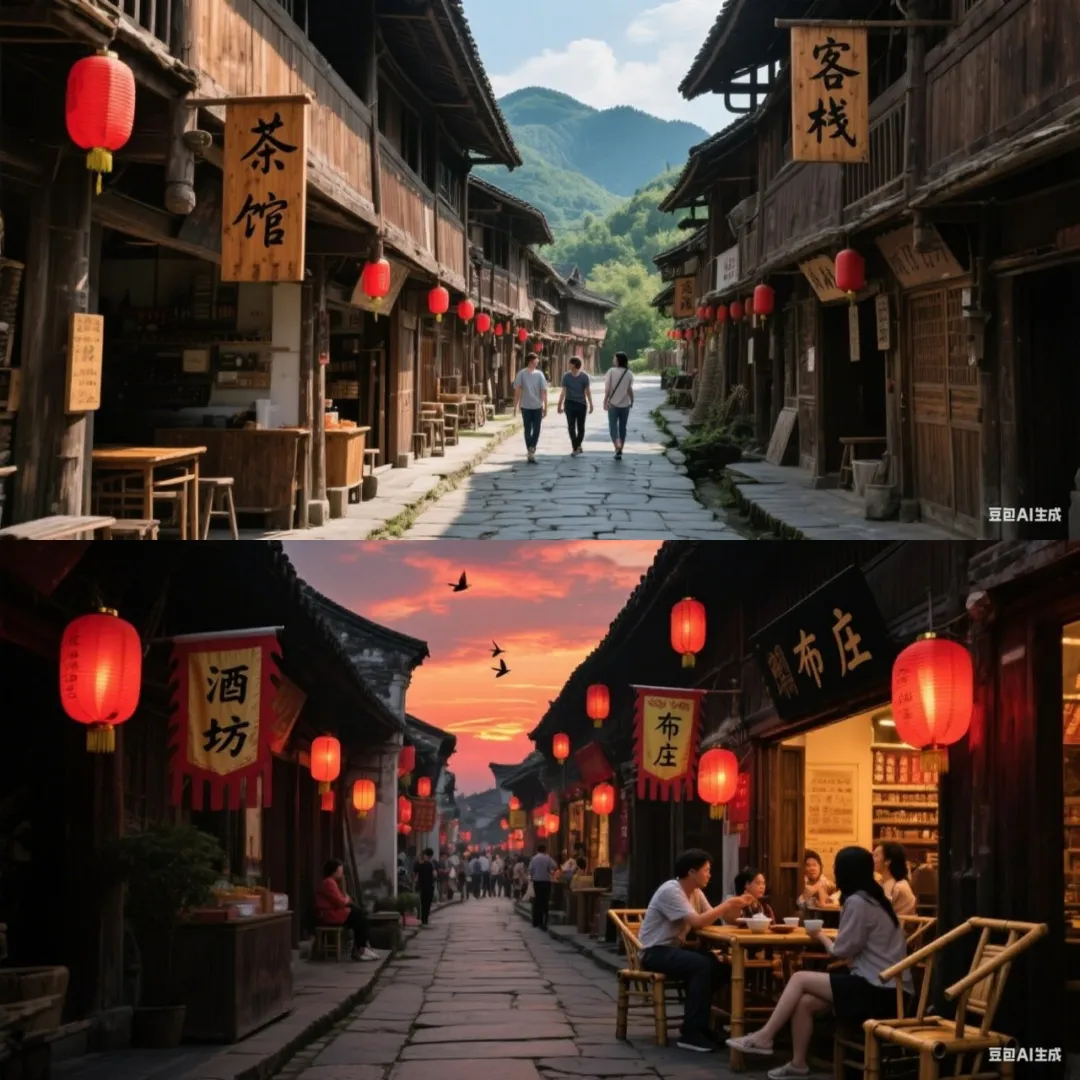
From the perspective of cultural and tourism projects themselves, the problem of homogenization has reached an alarming level. Many scenic spots lack unique creativity and planning during development: if one has an ancient town, others will also build ancient towns; if one develops a glass plank road, others will follow suit to build one. As a result, no matter where tourists go, they see familiar-looking scenes and participate in similar activities.


(Assembly-Line Scenic Spots Cause Aesthetic Fatigue)


This one-size-fits-all model has gradually made tourists lose their desire to explore, and also trapped cultural and tourism projects in the vicious cycle of "a busy start at opening, but few visitors afterwards". When it comes to promotion and publicity, the challenges are even more numerous. Traditional promotional methods such as posters, leaflets, and TV advertisements can no longer attract consumers who have grown up in the era of information explosion.
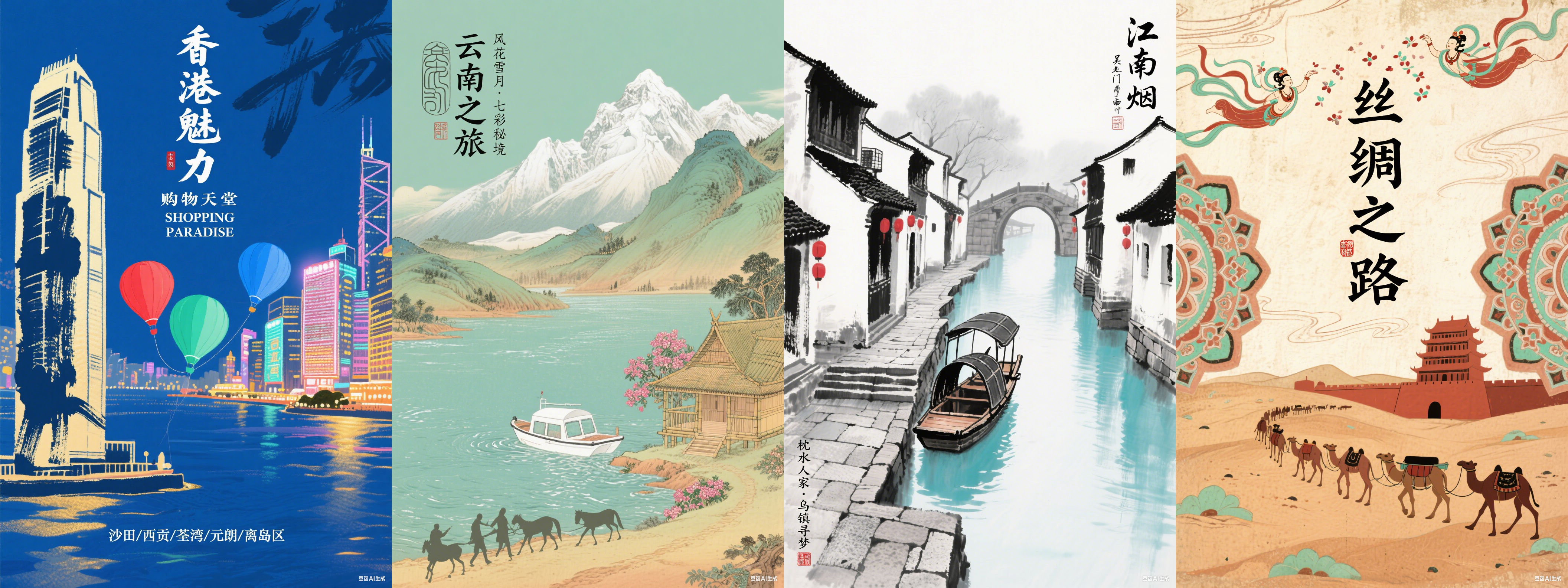

(Traditional Scenic Spot Leaflets and Travel Posters)


They convey limited information and have a single form, making it difficult to leave a deep impression on consumers. While emerging short video channels have quickly captured the market with their concise and fast-paced characteristics and become a popular choice for cultural and tourism promotion, they also have many unavoidable limitations. The low threshold for content creation in short videos has led to a flood of similar content on platforms.
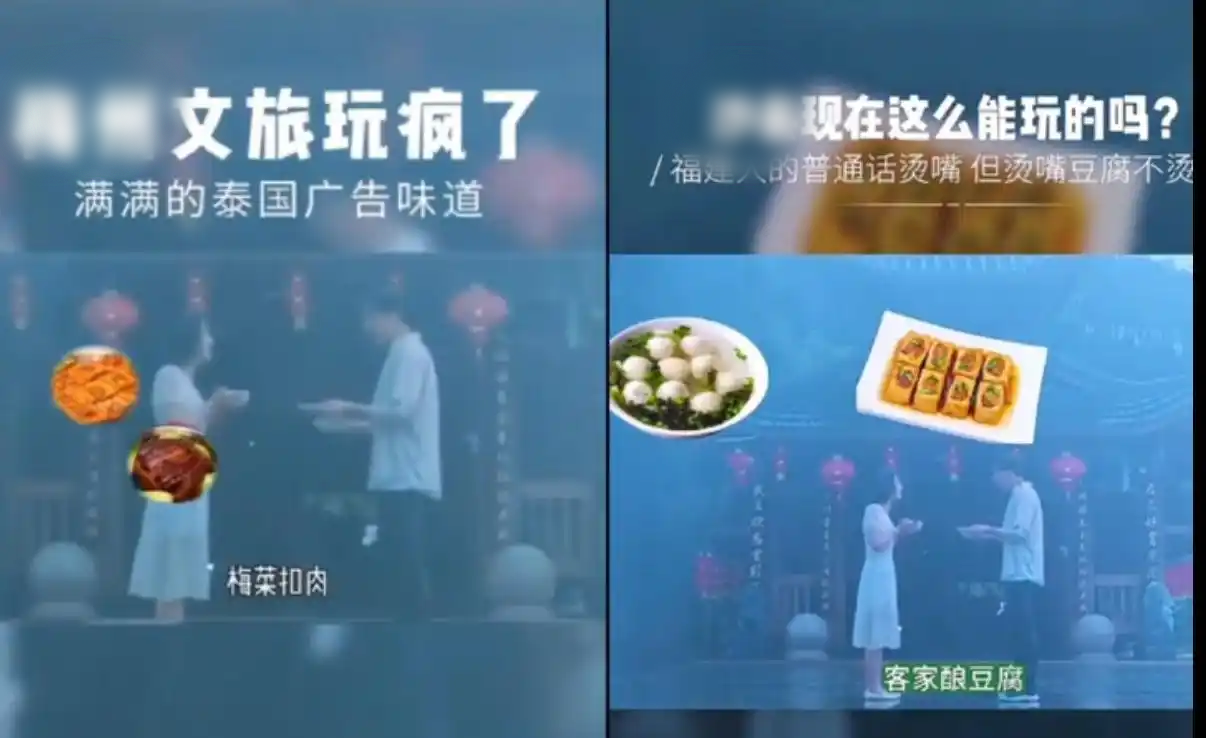

(A cultural and tourism promotional video of a certain place was accused of plagiarism, source: Internet)


Open any short video platform, and most of the videos about scenic spots consist of a few seconds of footage of iconic attractions with popular background music added. They lack exploration of in-depth content such as the scenic spots' cultural connotations and characteristic experiences.
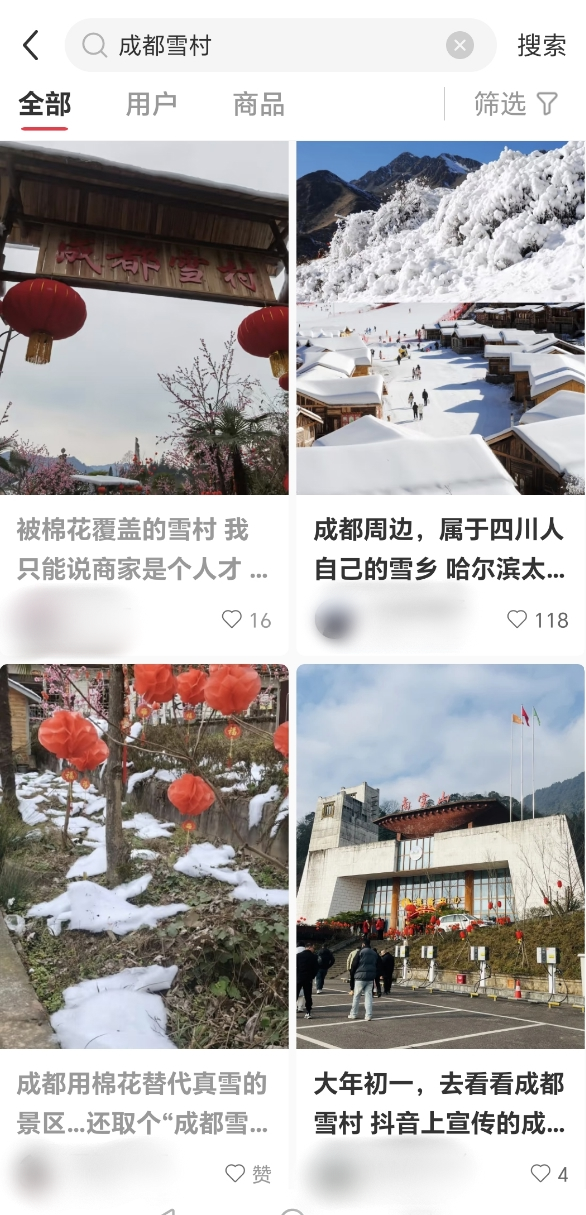

Many tourists are attracted by the "internet-famous scenic spots" filtered in short videos, but when they arrive at the scene, they find a huge gap between the actual scene and the video. For example, a stream that appears crystal clear in the video may just be a murky ditch in reality; a photo spot that looks less crowded with beautiful scenery in the video may actually be packed with tourists. Such false promotion not only greatly disappoints tourists but also seriously damages the reputation of cultural and tourism destinations.


(Netizens' complaints about "No snow in Snow Village" on social platforms, source: Internet)


Moreover, short videos are usually only a few tens of seconds to one or two minutes long. This fragmented communication method prevents tourists from understanding a cultural and tourism project comprehensively and systematically. Tourists may only know that a certain scenic spot is beautiful but not the historical story behind it; they may know that there is a certain activity but not its specific process or how to participate.


As a result, the traffic brought by short videos can hardly be effectively converted into actual tourism consumption. Many tourists only feel "tempted" after watching the videos, but will not actually "take action".


Against this backdrop, the importance of three-dimensional cultural and tourism promotion has been elevated to an unprecedented level. It requires breaking the single dimension of traditional promotion, showcasing the unique charm and rich connotations of cultural and tourism projects from multiple levels and perspectives in an all-round manner, enabling consumers to gain in-depth understanding, resonate, and ultimately convert into actual tourism behavior.


Capture Cloud's 3D real-scene cultural and tourism promotion is precisely an innovative solution that conforms to this trend.


The 3D real-scene content of Capture Cloud has extremely strong adaptability and can be seamlessly deployed on multiple owned platforms such as the official website, official mini-program, and official WeChat account of cultural and tourism projects.


Unlike the short video model—where content is passively pushed and users may casually swipe past it—when users actively click into these platforms to view 3D real-scene content, they often do so with clear intentions to learn and explore. They will browse every detail more patiently and carefully, and this active viewing allows users to form a deeper and more comprehensive understanding of cultural and tourism projects.
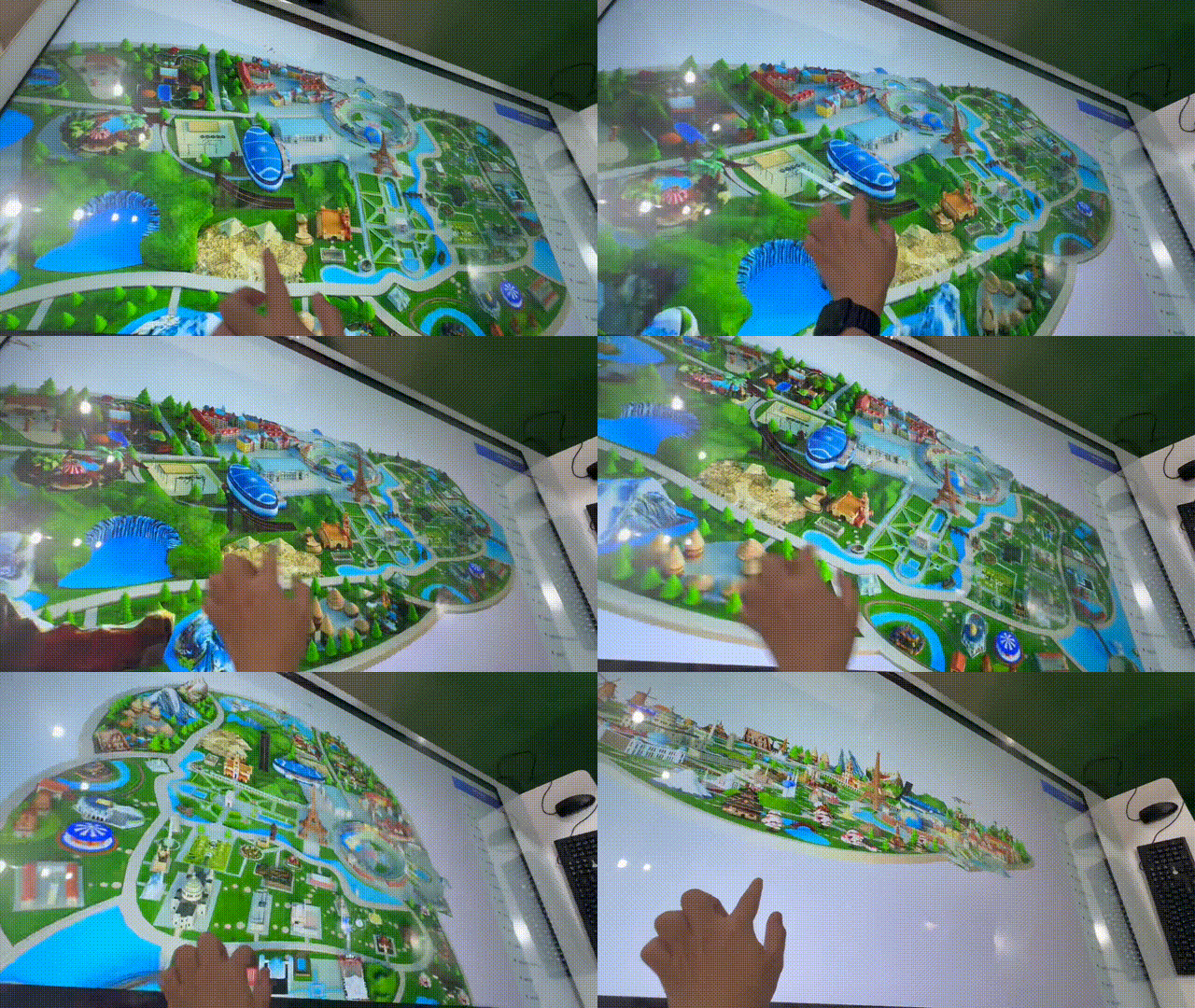


The 3D Scenic Spot Sandbox function, like a miniature scenic spot model, clearly presents the scenic area's landscape layout, road directions, scenic spot distribution, and other details to users. Users can observe the overall view of the scenic spot from different angles through operations such as zooming and rotating, and quickly find the areas they are interested in.
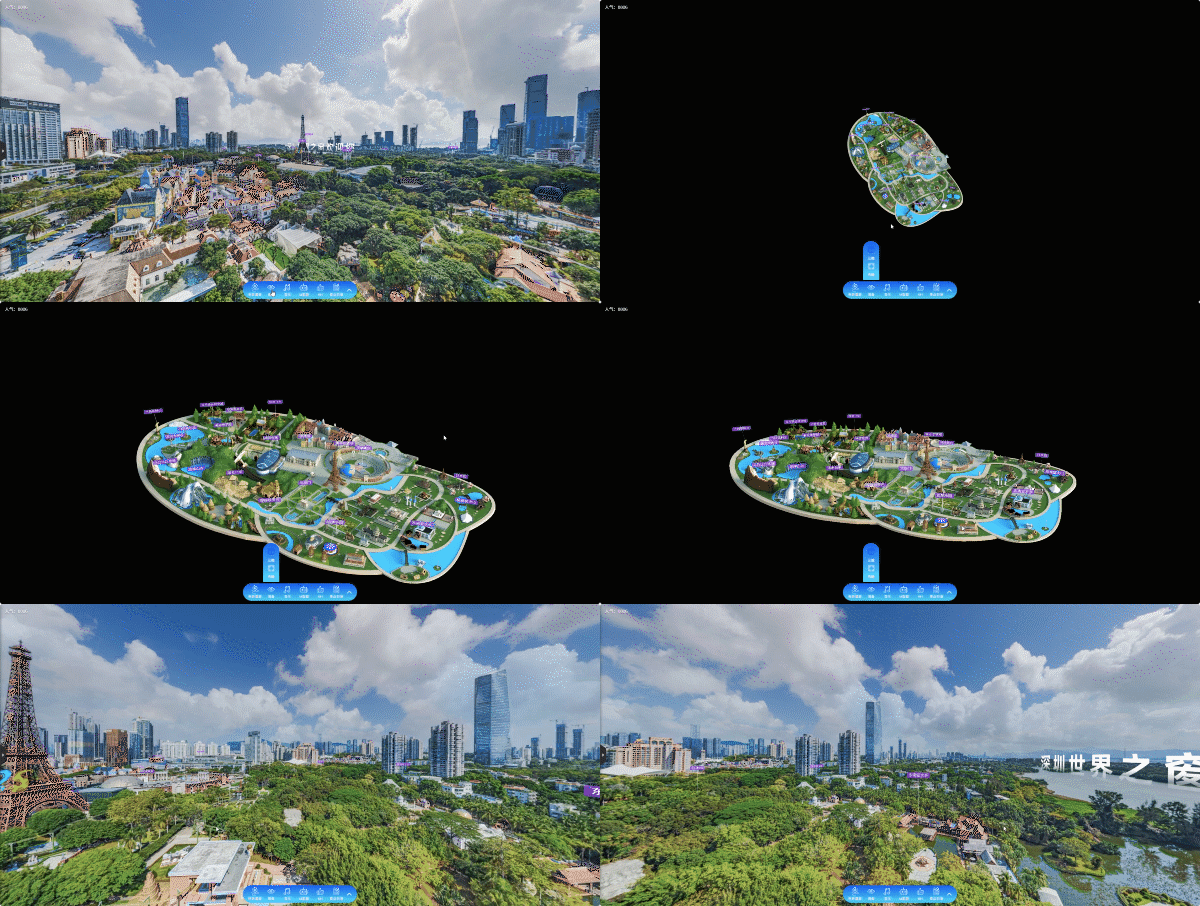

(3D Sandbox Model)

For example, users can plan a child-friendly route in advance via the sandbox to avoid unnecessary detours; photography enthusiasts, on the other hand, can lock in the best shooting locations and angles through the sandbox.


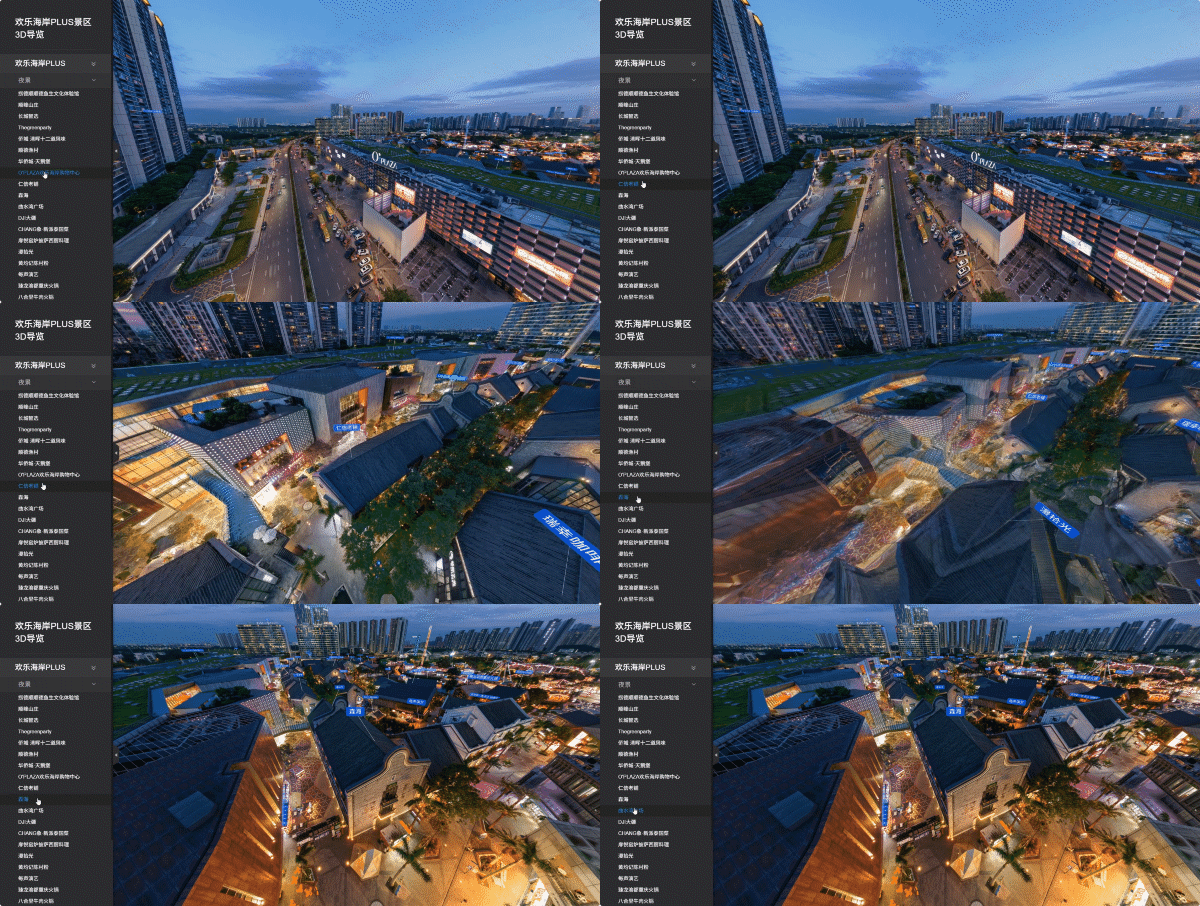
The Scenic Spot List function, like a detailed scenic area guide, categorizes and arranges various scenic spots by type or region, with each spot accompanied by a brief introduction and a 3D real-scene entrance.


Users can click to view the details of a specific scenic spot based on their interests, and learn about information such as its historical background and characteristic landscapes.


(One-Click Jump for Scenic Spot List)

For example, users interested in ancient architecture can directly find relevant ancient architecture scenic spots in the list and gain an in-depth understanding of their architectural styles and cultural values.


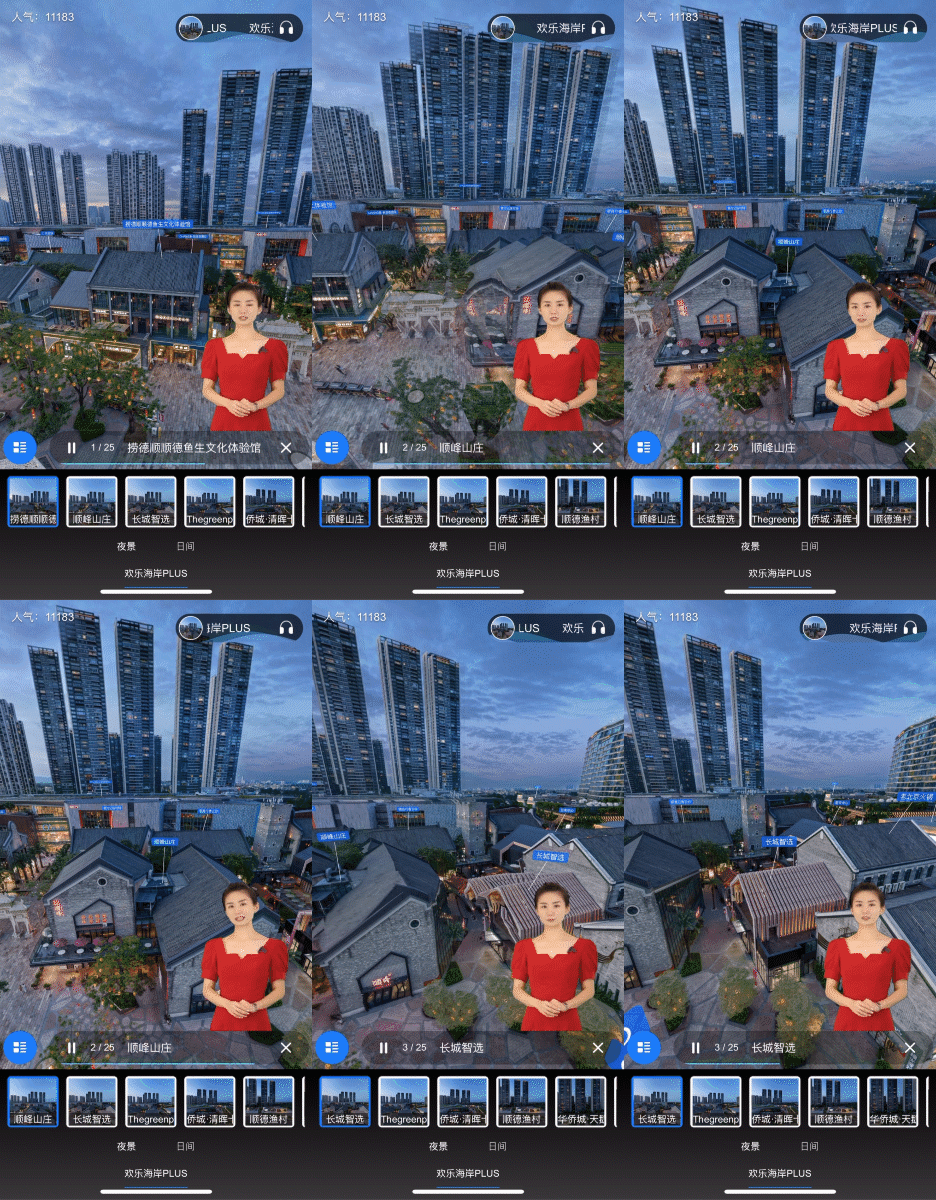
The Auto-Roaming function is comparable to an all-weather online "golden guide". It leads users to immerse themselves in traveling through every corner of the scenic spot along the optimal tour route.


(Auto-Roaming + Digital Human Narration/Commentary)

During the roaming process, the perspective switches automatically to show the details of the scenic spots up close, and appropriate sound effects are also incorporated, making users feel as if they are truly there. Users don’t need to operate anything themselves; they just need to relax and can take in the entire scenic area without missing any wonderful sights.


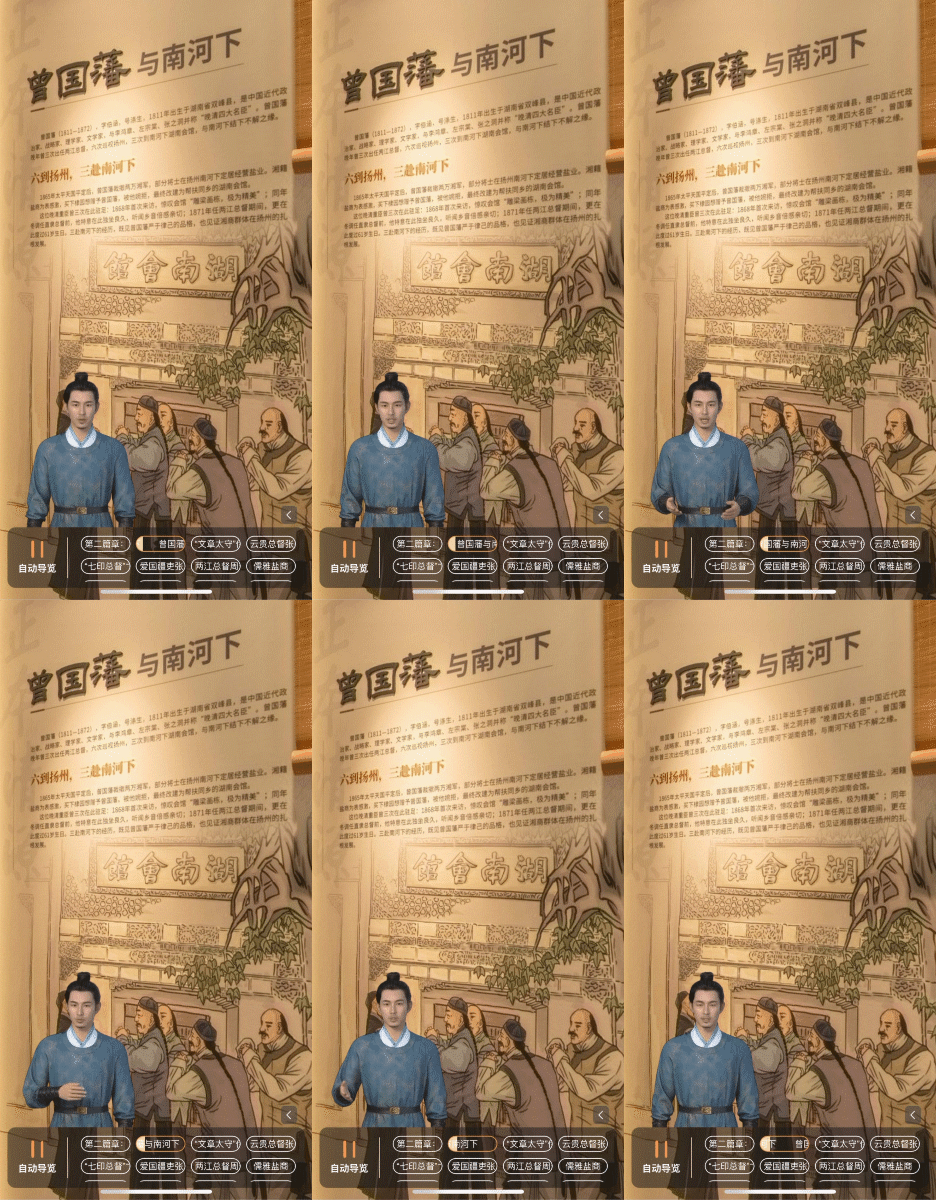
The AIGC digital human technology integrated into Capture Cloud has injected new vitality into cultural and tourism promotion. These digital humans have realistic images and vivid expressions, and can also be customized according to the characteristics of the scenic spot.


They can be transformed into historical figures of the scenic spot, telling the past of the scenic spot in storytelling language; they can also be transformed into local folk custom experts, showing users the unique folk culture.


(Smart Guided Tour + Virtual Human Narration/Commentary)


For example, in an ancient city scenic spot, the virtual human can be dressed as an ancient city guard, introducing the ancient city's defense system and historical battles to users, allowing them to feel the profundity of history through interaction.


The scenic spot's AI customer service is like an on-call attentive butler, available 24/7 to answer various questions for users. Whether it's about ticket prices, opening hours, or catering and accommodation in the scenic spot, users only need to input their questions, and the AI customer service can quickly provide accurate answers.


(AI Customer Service: Instant Response, 24/7 Q&A)
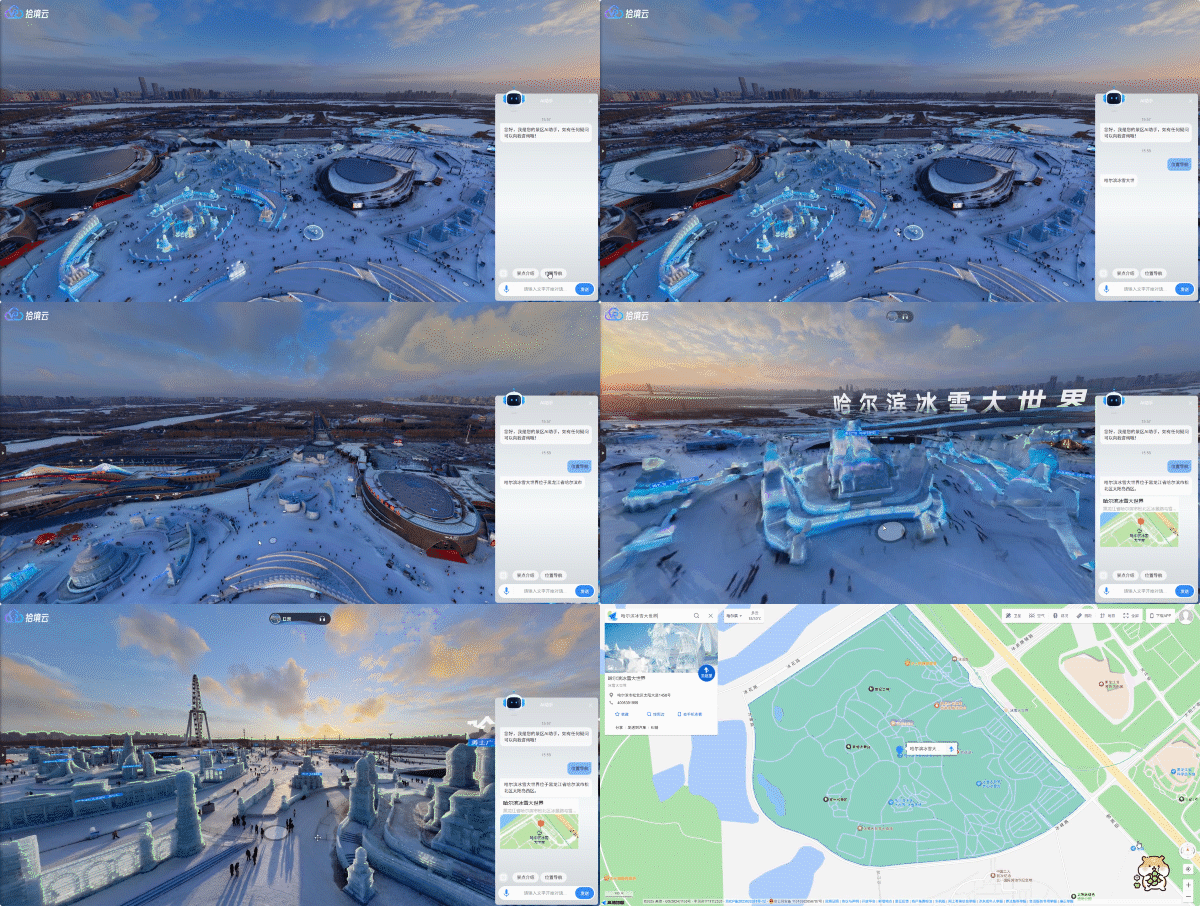

If users' questions are relatively complex, the AI customer service can also automatically transfer them to human service to ensure that users' needs are met.


The traffic guidance function provides great convenience for users' travel. It integrates information on various transportation methods, plans the optimal travel route for users based on their departure location—including options such as bus, subway, and self-driving—and updates traffic information in real time to remind users to avoid congested sections.

(Traffic Route Guidance)


Users can also check the location of parking lots and the distribution of bus stops around the scenic spot through 3D real scenes, making travel smoother.


3D Real-Scene Low-Altitude Roaming is a highly innovative function of Capture Cloud. Using technologies such as drones, it presents the entire view of the scenic spot to users from a low-altitude perspective. Users can overlook rolling mountains, rippling lakes, and scattered villages like a bird, experiencing that grand and shocking beauty.


(Scenic Spot 3D Panoramic Low-Altitude Roaming)
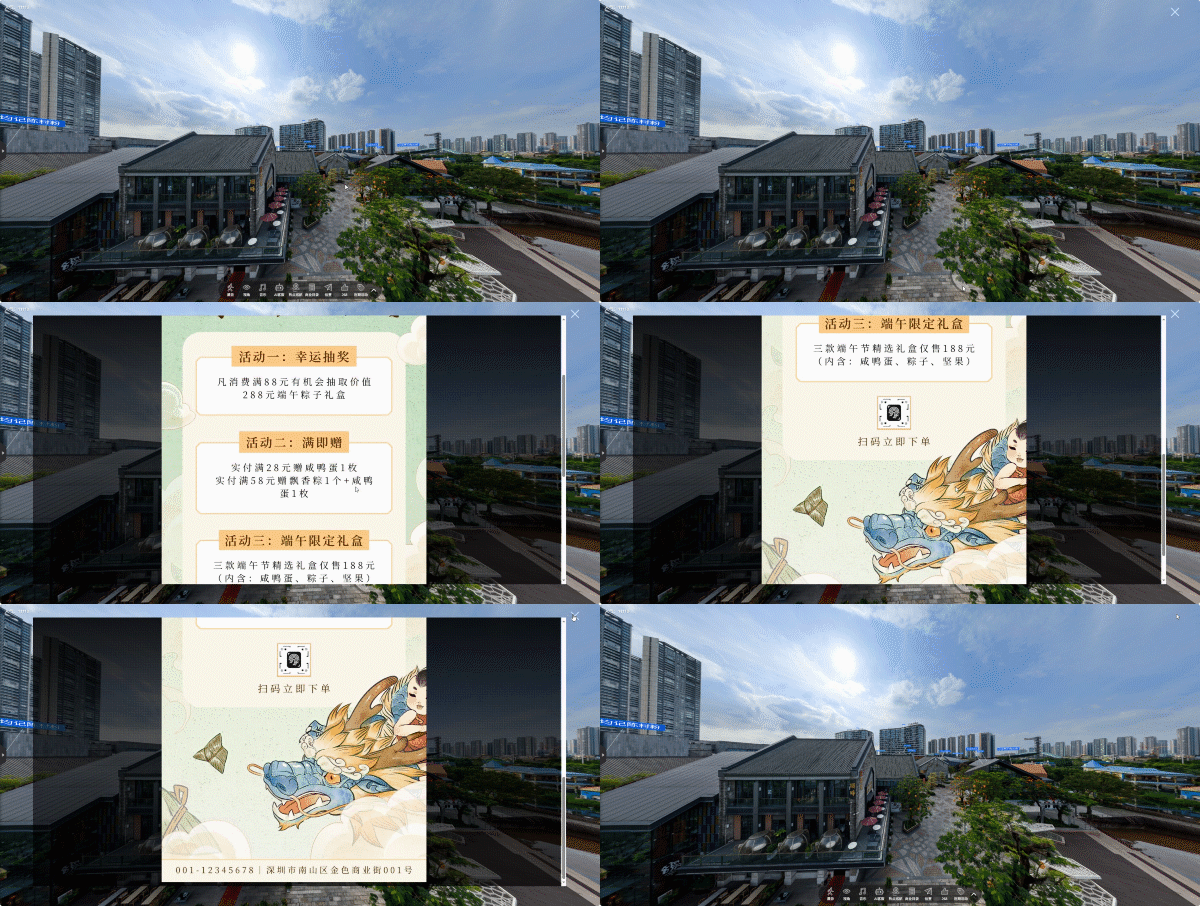

This perspective is unattainable when tourists visit on the ground. It can bring users a brand-new sensory experience and greatly stimulate their curiosity and desire to visit the site in person.


In terms of post-management, Capture Cloud's advantages are even more obvious. Scenic spot managers can freely configure various contents in the 3D real scene through a simple and easy-to-use backend system.


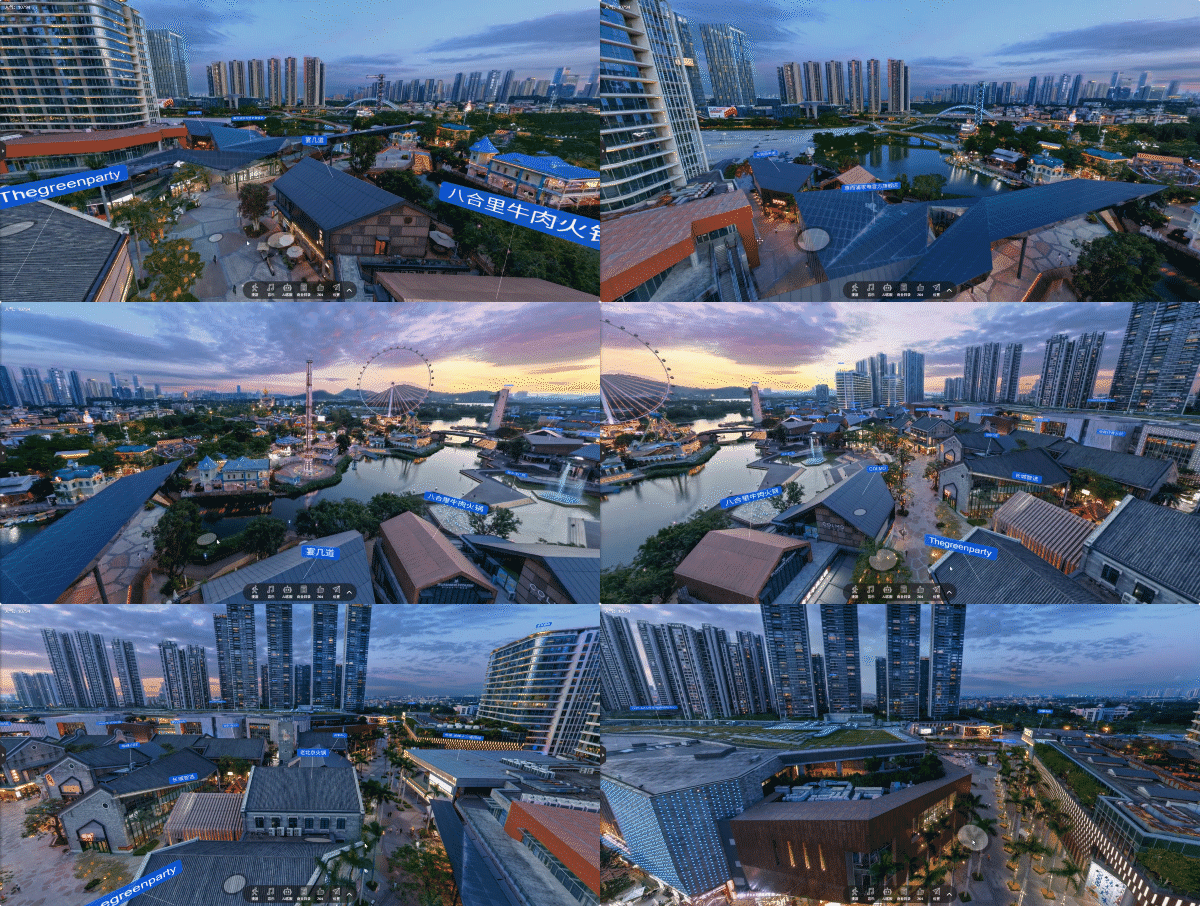
(Adding preferential activity information to 3D panoramic roaming of commercial districts)


For example, during holidays, holiday decorations and event information can be added to the 3D real scene; when the scenic spot adds new attractions or facilities, the 3D model and related introductions can be updated in a timely manner;
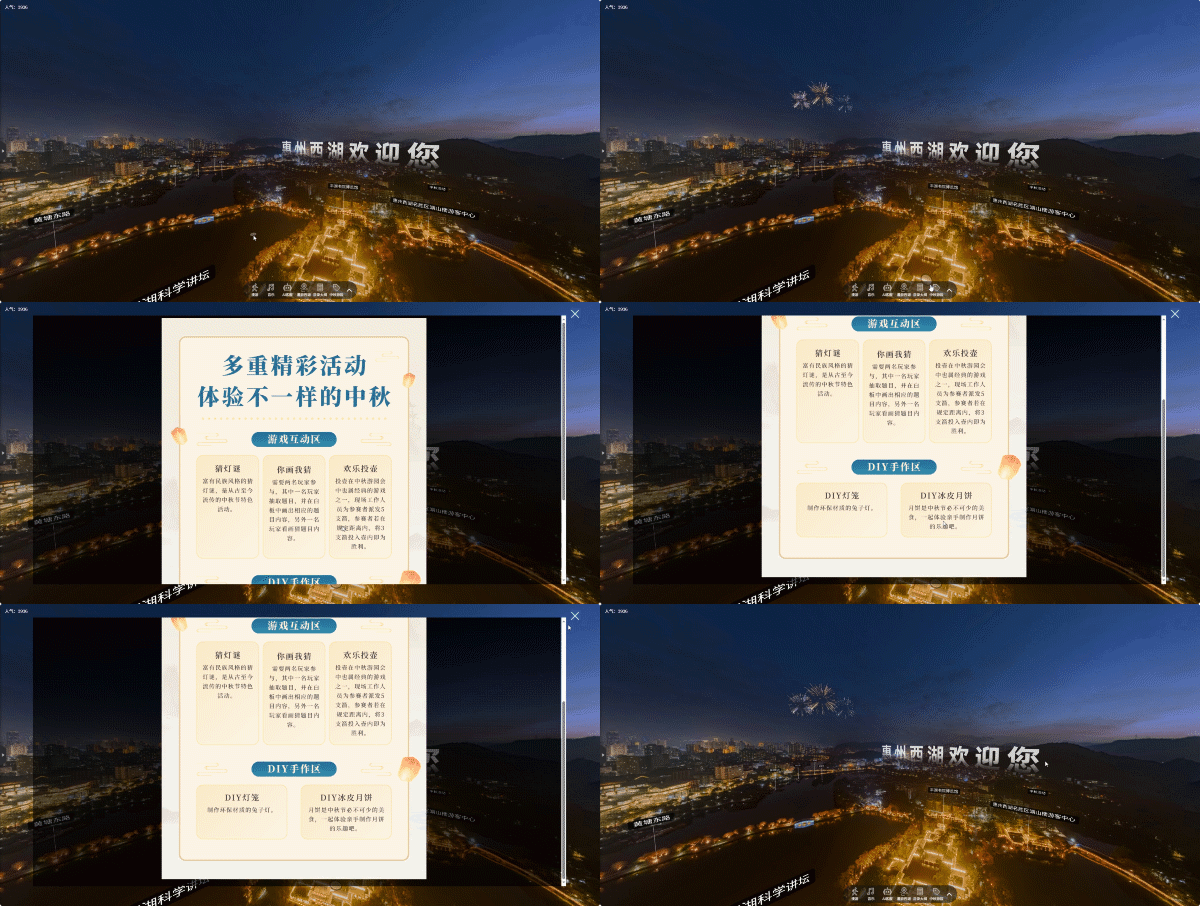

(Adding holiday event information to 3D panoramic roaming of scenic spots)


If certain areas within the scenic spot are temporarily closed, they can also be quickly marked in the backend to remind users to pay attention. This flexible management method ensures that the 3D real-scene content remains fresh and accurate at all times, continuing to attract users' attention.


(Capture Cloud 3D Real-Scene Creation Platform)


In summary, Capture Cloud's 3D real-scene cultural and tourism promotion showcases the charm of cultural and tourism projects in an all-round and in-depth manner through a variety of innovative functions. It effectively makes up for the shortcomings of traditional promotion and short-video promotion, providing strong support for solving the current predicament in the cultural and tourism industry.


(3 Simple Steps to Easily Build a 3D Real-Scene Roaming Experience)


It can not only enhance the image of cultural and tourism projects and realize three-dimensional promotion, but also improve users' sense of experience and participation, thereby promoting the conversion of tourism consumption. In the critical period of transformation and upgrading of the cultural and tourism industry, Capture Cloud is undoubtedly a powerful assistant for the promotion of cultural and tourism projects.

Other News

  • A research team from Stanford University summarized 30 years of psychological research on enhancing VR experiences.

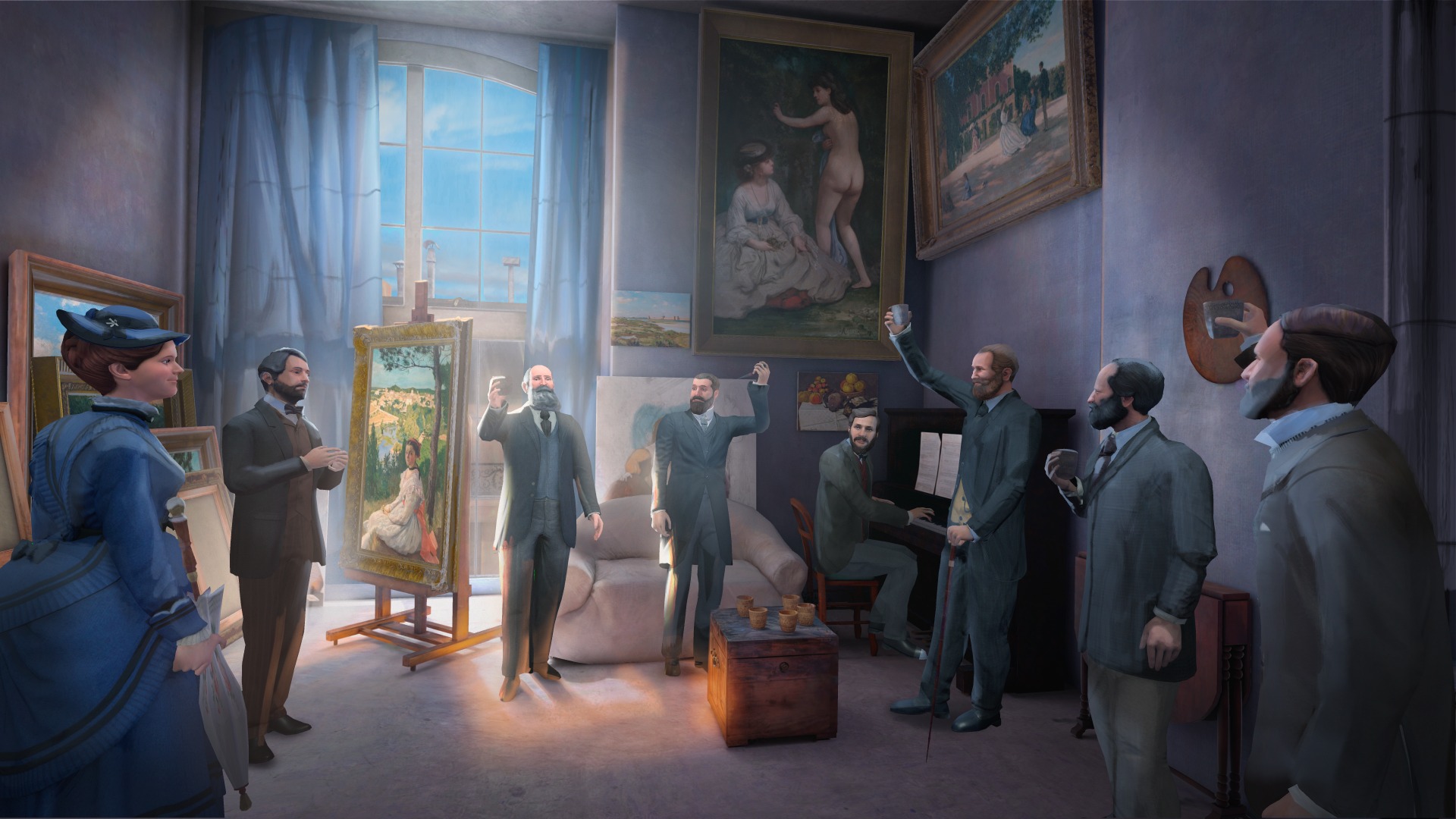
  • The immersive experience "Paris 1874: An Evening with the Impressionists" has officially launched in Shenzhen

  • Why Do Panoramic Photography Practitioners Prefer "Capture Cloud"? These Advantages Are Too Tempting!